Deadly late-season Atlantic hurricanes growing more frequent
What may be the final tropical disturbance in the Atlantic (94L) has fizzled, due to dry air and increasing wind shear, and there's an excellent chance that this will be final "Invest" of 2010 in the Caribbean. The 2-week wind shear forecast from the GFS model is showing a dramatic increase in wind shear over the Caribbean in the coming weeks, which should put an end to the Caribbean hurricane season. However, it's been another remarkably active November in the tropics this year. The formation of Hurricane Tomas this month marks the fourth consecutive year in the Atlantic with a hurricane occurring November 1 or later. We had Category 1 Hurricane Noel in 2007, Category 4 Hurricane Paloma in 2008, Category 2 Hurricane Ida in 2009, and now Category 2 Tomas in 2010. This is the first time since beginning of reliable hurricane records in 1851 that there have been four consecutive years with a late-season November or December hurricane in the Atlantic. The previous record was three straight years, set in 1984 - 1986. It used to be that late-season hurricanes were a relative rarity--in the 140-year period from 1851 - 1990, only 30 hurricanes existed in the Atlantic on or after November 1, an average of one late-season hurricane every five years. Only four major Category 3 or stronger late-season hurricanes occurred in those 140 years, and only three Caribbean hurricanes. But in the past twenty years, late-season hurricanes have become 3.5 times more frequent--there have been fifteen late-season hurricanes, and five of those occurred in the Caribbean. Three of these were major hurricanes, and were the three strongest late-season hurricanes on record--Lenny of 1999 (155 mph winds), Paloma of 2008 (145 mph winds), and Michelle of 2001 (140 mph winds). Of course, the number of storms we are talking about is small, and one cannot say anything scientifically significant about late-season Atlantic tropical cyclone numbers, unless we include storms from late October as well. This was done, though, by Dr. Jim Kossin of the University of Wisconsin, who published a 2008 paper in Geophysical Research Letters titled, "Is the North Atlantic hurricane season getting longer?" He concluded that yes, there is an "apparent tendency toward more common early- and late-season storms that correlates with warming Sea Surface Temperature but the uncertainty in these relationships is high". The recent increase in powerful and deadly November hurricanes would seem to support this conclusion.

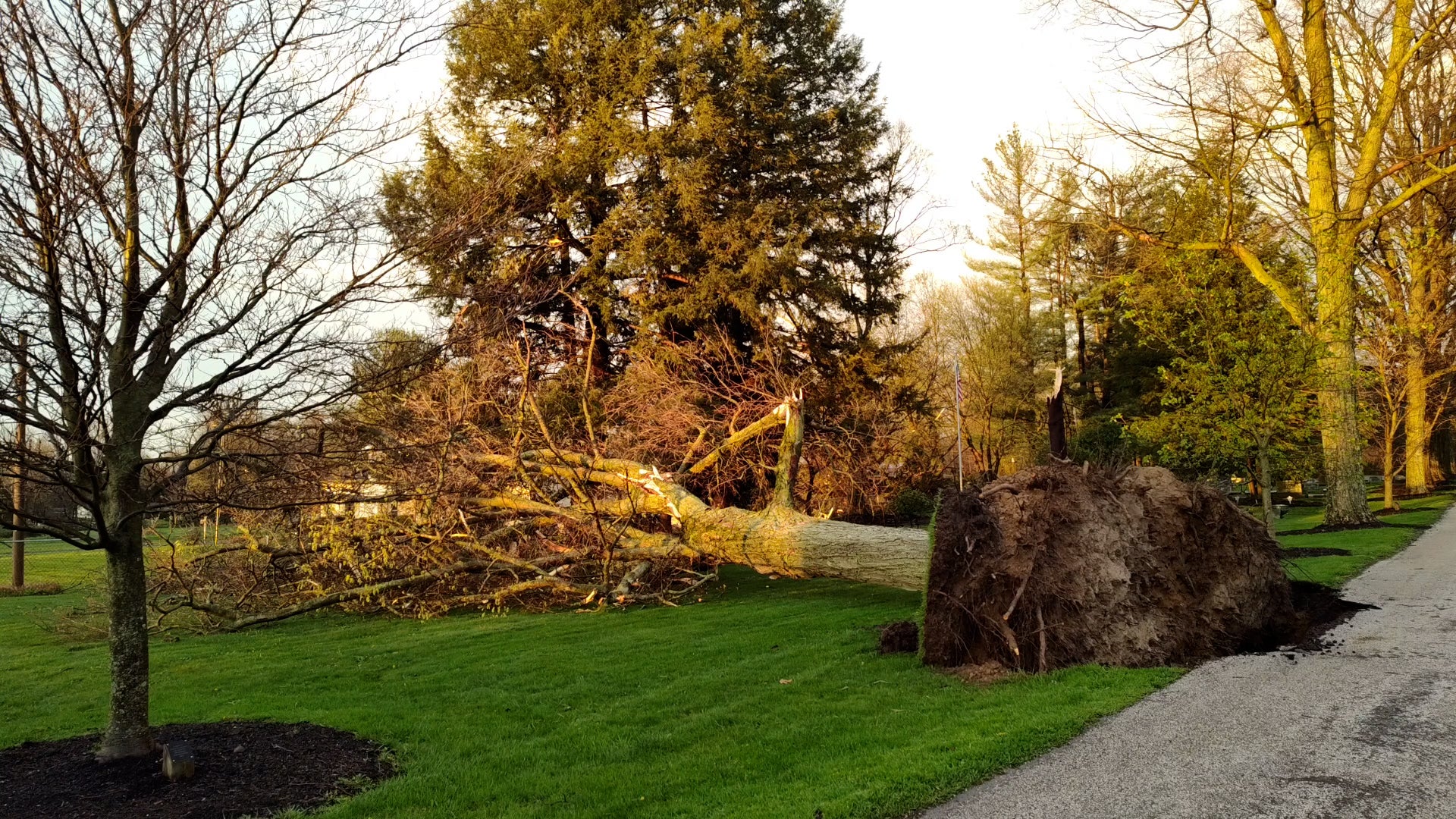
Figure 1. Damage on St. Lucia from Hurricane Tomas. Image credit: St. Lucia Star.
Deadly late-season Atlantic tropical cyclones are growing more frequent
In the 500+ years people have been encountering hurricanes in the Atlantic and recording these encounters, we are sure of only twenty November and December storms that have caused loss of life. If we restrict our time window to the past 70 years, when we have a fairly reliable data base of hurricane mortality thanks to the yearly storm summaries published in Monthly Weather Review, we find only ten late-season storms that killed people. Of those ten, seven occurred in the past twenty years, including the second deadliest late-season tropical cyclone on record, Hurricane Gordon of 1994, which killed 1145 people on Haiti. Only the Great Cuba Hurricane of 1932, which killed 3107 people in Cuba, the Cayman Islands, and the Bahamas, was a deadlier late-season tropical cyclone. Hurricane Tomas ranks as the 6th deadliest late-season hurricane since 1851 in the Atlantic. The storm left 30 dead or missing on Haiti, at least nine dead on St.Lucia, two on Curacao, and one in the Virgin Islands. The storm has caused hundreds more indirect cholera deaths in Haiti, by spreading contaminated water.

Figure 2. Number of days a named storm existed in the Atlantic during November and December between 1950 and 2010. Years when an El Niño event occurred are not included, in order to make the plot smoother (El Niño events tend to dampen Atlantic hurricane activity during all portions of the season.) There has been a general increase in late-season tropical cyclone activity over the Atlantic in recent decades.
The increase in deadly late-season storms in the past twenty years is primarily a Caribbean phenomena. Only two deadly late season hurricanes have affected the U.S. in the past century: Hurricane Kate of 1985, which killed five in Florida, and the 1925 Florida Hurricane, which hit southwest Florida as a Category 1 hurricane on December 1. This remarkable storm was the latest landfalling hurricane in U.S. history, and killed 60 people.
Resources
Kossin, J., 2008, "Is the North Atlantic hurricane season getting longer?", Geophysical Research Letters, Vol. 35, L23705, doi:10.1029/2008GL036012, 2008.
A list of the 20 deadly late-season tropical cyclones: http://www.wunderground.com/hurricane/deadly_nove mber.asp
My blog post, Is the Atlantic hurricane season getting longer?
Next post
I'll have a new post on Friday.
Help support Portlight.org's efforts to bring some Christmas cheer to the kids of Haiti, by donating to their Christmas in Haiti campaign.
Jeff Masters
Reader Comments
Page: 1 | 2 | 3 | 4 | 5 | 6 | 7 | 8 | 9 | 10 | 11 | 12 | 13 | 14 | 15 | 16 — Blog Index
Hopefully, that means the Mostyn Law Firm commercials that come on the television EVERY TWO FREAKING MINUTES will stop being shown. It's almost to the point where I've just about stopped watching anything live, just so I can fast forward through them on the DVR.
Anyways, I hope everybody involved in that lawsuit finds a good use for that $200 Ike check that they'll receive 10 years from now after all the appeals are done and the lawyers collect their chunk of the money
Pretty good. I've been busy the past week in college work. I had a very big interview today with the Orlando Magic owner, very nice man.
thats awesome! if you ever get the chance to get D-Howard's autograph, id love it! lol he's my favorite ha
but I hope all goes well
Of course I'll post the record lows; it's just that--so far this past summer and fall--there have been very few. I wish I'd kept at least a thorough weekly record, but if forced to guess at gunpoint, I'd venture that since April, record highs in the CONUS have outnumbered record lows by roughly--very roughly--16,000 to 3,000 or so. (And I'd be surprised if that ratio is far off either too high or too low.)
Anyway, thanks for the kind words, and know that they're reciprocated. You didn't hog the forum the way I know I have, but still, I enjoyed reading your posts, and always took something away from them. ;-)
I know his name. He spoke at my college today, and my job was to interview him.
ScienceDaily (Nov. 16, 2010) — The troposphere, the lower part of the atmosphere closest to the Earth, is warming and this warming is broadly consistent with both theoretical expectations and climate models, according to a new scientific study that reviews the history of understanding of temperature changes and their causes in this key atmospheric layer.
Scientists at NOAA, the NOAA-funded Cooperative Institute for Climate and Satellites (CICS), the United Kingdom Met Office, and the University of Reading in the United Kingdom contributed to the paper, "Tropospheric Temperature Trends: History of an Ongoing Controversy," a review of four decades of data and scientific papers to be published by Wiley Interdisciplinary Reviews: Climate Change, a peer-reviewed journal..
Link
It does look a little better
ScienceDaily (Nov. 17, 2010) — The overall warming of Earth's northern half could result in cold winters, new research shows. The shrinking of sea-ice in the eastern Arctic causes some regional heating of the lower levels of air -- which may lead to strong anomalies in atmospheric airstreams, triggering an overall cooling of the northern continents, according to a study recently published in the Journal of Geophysical Research.
"These anomalies could triple the probability of cold winter extremes in Europe and northern Asia," says Vladimir Petoukhov, lead author of the study and climate scientist at the Potsdam Institute for Climate Impact Research. "Recent severe winters like last year's or the one of 2005-06 do not conflict with the global warming picture, but rather supplement it."
Link
Link
Japanese Company Hopes to Deploy Fleets of Submarines to Stop Typhoons
A Japanese company has patented a scheme that uses submarines to downgrade the force of typhoons as they threaten to make landfall.
Under the plan, a fleet of about 20 subs would dive some 100 feet below the surface just in front of an approaching storm. Each submarine would be fitted with eight pumps capable of quickly dumping more than 500 tons of chilled water per minute into the water above. According to Ise Kogyo, the company behind the idea, 20 submarines could quickly lower the temperature of more than 600,000 square feet of water to the point that a storm%u2019s strength would be diminished.
where does that lead?
ultimately?
pray tell the truth about THAT....
i know the answer...and it ain't pretty
Does x94L have any chance?
By the time the COC of the storm reaches the area of sea water cooled by the submarines, the outer bands of the storm would have spread all the cooled water in and out of the storm.... All along it's circunference....
Another different and maybe better approach would be to place the 20 subs inside the Eye, traveling with it and doing the cooling of SW...
Doesx94L have any chance?
Not a good one, but the doctors have said the same about me a number of times.
(It does look better organized than it did this morning though.
the season is over you are just refusing to accept it
as for the area over the open cen atlantic thats nothing but ITCZ activity or inter tropical convergence zone enhancement as for carb that will be gone with the the heat from the sun ending for today
Spoil-sport!!
So those 20 subs would cool approximately 2.1% of a single square mile. Yeah, that will do a lot. (1 square mile, 5280' x 5280' is 27,878,400 sq ft)
Unreal Jap. idea.... But anyhow the idea follows a good intention....
That's what I see too. However, not many people are giving it a real possibility.
600,000 square feet? That's it? With 20 submarines? That's just under 14 acres, or roughly 1/46 of one square mile. By way of comparison, Hurricane Igor at its largest covered nearly 650,000 square miles---an area more than three million times as large as the 600,000 square feet of cooler water the subs would churn up. But lets say you wanted to only cool the area beneath a 10-mile-wide eye; that would still require more than 1,000 submarines--or far more submarines than currently exist in all the world's navies. Of course, getting every nation to cooperate is a different thing entirely, not to mention that it's assumed these wouldn't be nuclear subs, so they'd be contributing to the buildup of greenhouse gases while working to cool the surface waters...
Back to the drawing board... ;-)
Viewing: 101 - 151
Page: 1 | 2 | 3 | 4 | 5 | 6 | 7 | 8 | 9 | 10 | 11 | 12 | 13 | 14 | 15 | 16 — Blog Index